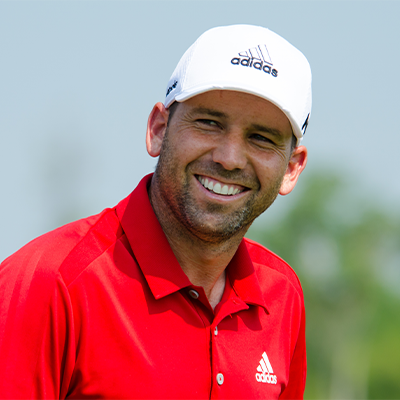
Sergio García has never been one to fade quietly into the background. But his latest chapter may be the most consequential yet. The former Masters champion has officially stepped away from LIV Golf, a decision shaped by both personal controversy and the growing instability surrounding the league’s financial future.
Augusta Fallout Still Lingers
García’s exit doesn’t come in a vacuum. His week at The Masters in 2026 drew attention for all the wrong reasons. Frustration boiled over across multiple rounds — visible exchanges with officials, club slams, and a general loss of composure that clashed sharply with the discipline typically demanded at Augusta National.
For a player who once slipped on the Green Jacket with precision and poise, the optics were jarring. Augusta has little tolerance for distractions, and García’s conduct became a subplot that overshadowed his actual play. Within the game, those moments tend to linger longer than scorecards.
LIV Golf’s Structural Questions
Beyond Augusta, the broader context matters more. Public Investment Fund — the financial engine behind LIV Golf — has been at the center of ongoing uncertainty. Questions about long-term sustainability, investment continuity, and strategic direction have created a cloud over the league.
For veterans like García, those concerns carry weight. LIV Golf was built on stability through scale: guaranteed contracts, team structures, and deep financial backing. Once that foundation begins to look less certain, the calculus changes quickly, particularly for players nearing the latter stages of their careers.
García’s departure reflects that shift. This is not just a roster move; it’s a response to a league whose future appears less defined than when he first joined.
A Door Back to the PGA Tour?
Now comes the complicated part. García is reportedly seeking a pathway back to the PGA Tour — a move that carries both competitive and political implications.
Reintegration is not straightforward. The divide between LIV and the PGA Tour reshaped professional golf, and returning players face questions around eligibility, reinstatement terms, and locker-room dynamics. García’s history with the Tour — both decorated and occasionally contentious — adds another layer to that process.
Still, from a purely competitive standpoint, the appeal is obvious. The PGA Tour remains the sport’s most established platform, offering legacy, ranking opportunities, and a structured competitive ecosystem that LIV has yet to fully replicate.
What This Means
García’s exit underscores a broader reality: the professional golf landscape is still in flux. LIV Golf was designed as a disruptor, but disruption without long-term clarity creates friction — and eventually, departures.
For García, this move reads as both reactive and strategic. The Augusta incident damaged optics. The uncertainty around LIV weakened stability. A return to the PGA Tour offers a chance at recalibration — competitively and reputationally.
Whether that path fully opens remains to be seen. But one thing is clear: García’s decision is less about a single moment and more about the shifting ground beneath the sport itself.