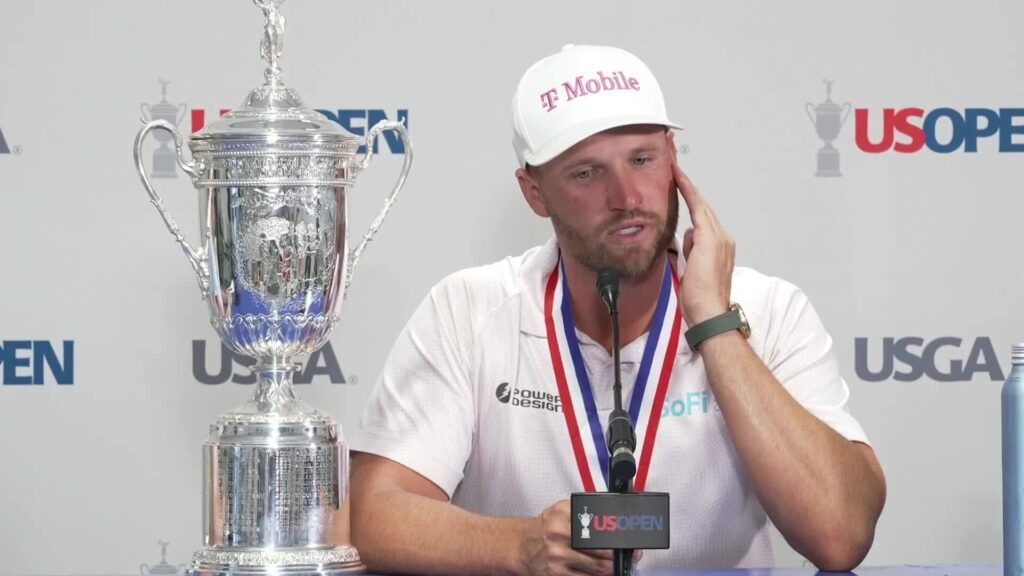
Golf officials are reportedly taking a stronger stance on spectator behavior following Wyndham Clark’s comments about the abuse he received during the final round of the U.S. Open at Shinnecock Hills.
Clark, who captured the U.S. Open title after holding off a late challenge from the chasing pack, faced a hostile atmosphere throughout Sunday’s final round. Several spectators were reportedly removed from the course after repeatedly heckling the American and directing personal comments toward him.
Following his victory, Clark called for greater respect between fans and players, stating that there should be a clear line between passionate support and unacceptable behavior.
In response to the incidents, tournament officials have reportedly begun reviewing spectator conduct policies to ensure similar situations can be addressed more quickly in future championships.
“We want passionate fans and great atmospheres, but player safety and respect for the competition remain a priority,” officials said following the championship.
The final round saw Clark become the target of numerous comments from sections of the crowd, with some spectators openly cheering his mistakes and celebrating missed putts. Law enforcement officers reportedly escorted several individuals away from the course after repeated warnings.
Clark later acknowledged the support he received from many fans but stressed that abusive behavior should not become part of the sport.
The incidents have sparked wider discussion throughout the golf world, with several players and analysts calling for stronger enforcement against disruptive spectators.
Golf’s governing bodies have already introduced stricter player conduct policies in recent years, and some observers believe similar attention may now be directed toward fan behavior.
Officials are reportedly considering additional measures that could include quicker intervention by marshals, increased security presence around key groups, and tougher penalties for spectators who disrupt play.
The situation has drawn comparisons to other recent incidents involving crowd behavior at major golf events, where players have occasionally faced verbal abuse during competition.
Despite the distractions, Clark remained composed and secured one of the biggest victories of his career at Shinnecock Hills.
The American’s victory, however, was accompanied by renewed debate over where the line should be drawn between enthusiastic support and unacceptable conduct.
While officials have not announced any specific policy changes, the events surrounding Clark’s final round appear likely to influence future discussions regarding spectator behavior at major championships.
As golf continues to attract larger and more passionate crowds, tournament organizers may face increasing pressure to balance fan engagement with maintaining the respectful atmosphere that has long been associated with the sport.
For Clark, the focus remains on celebrating his U.S. Open victory, but his comments have also helped shine a spotlight on an issue that many within the game believe deserves greater attention.